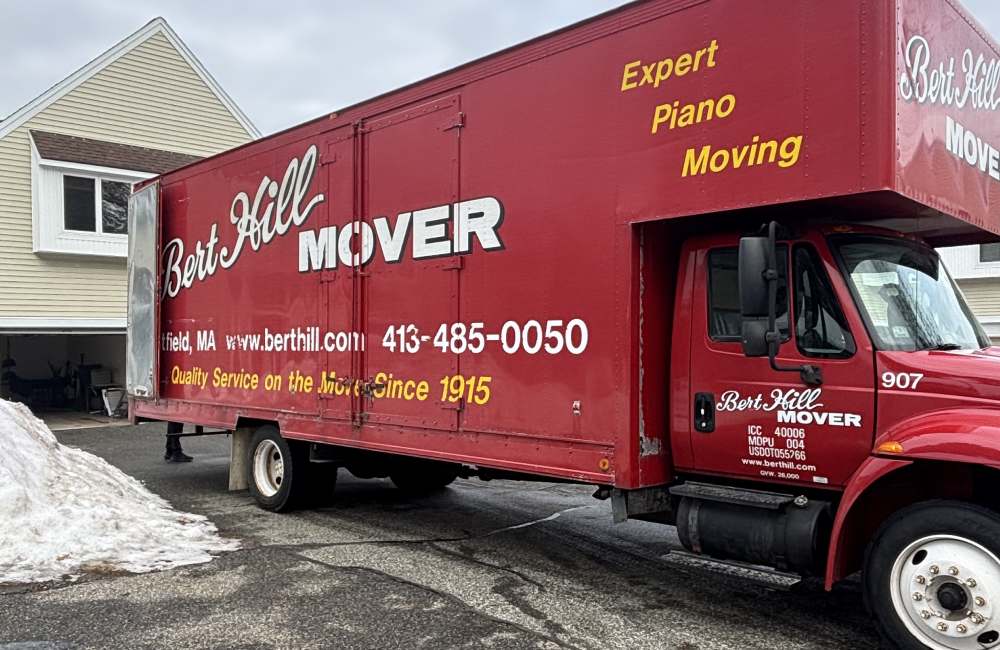
Moving is one of the most stressful things a person can go through. You’re packing up your whole life, trusting strangers with your grandmother’s china, and trying not to lose your mind in the process. So when it comes to choosing a moving company, the decision matters more than people realize — and the difference between a local mover and a national chain isn’t just about price. It’s about accountability, local knowledge, and whether someone actually picks up the phone when you call.
Here at Bert Hill Moving, we’ve been helping families and businesses move throughout Connecticut and Western Massachusetts for years. We operate out of East Granby, CT and Westfield, MA, and we know this region the way a national chain never could. In this post, we’re going to be straightforward with you: here’s why local movers consistently win — and what the research and real customer experiences actually show.
The National Chain Experience: What You’re Really Signing Up For
There’s a reason the big-name moving companies spend so much on advertising. They need to because their reputation often doesn’t carry the weight it once did.
Many national “moving companies” you find online are actually moving brokers — companies that take your deposit, sell your job to a third-party carrier, and then largely disappear from the picture. The Federal Motor Carrier Safety Administration (FMCSA) has been clear about this problem. In its Operation Protect Your Move initiative, the agency deployed investigators nationwide to address a surge in complaints about movers holding household possessions hostage and extorting additional charges from consumers — a practice overwhelmingly tied to broker-arranged moves rather than local direct carriers.
According to the FMCSA, complaints against brokers commonly involve estimates that are dramatically lower than what customers are ultimately charged, as well as brokers operating without proper insurance or required authority. When things go wrong, you’re often caught in the middle between a broker who collected your deposit and a carrier who claims they weren’t paid enough.
That’s not a hypothetical. That’s a documented pattern.
What Makes Local Movers Different: The Honest Breakdown
1. You’re Talking to the People Actually Doing the Job
When you call Bert Hill Moving, you’re talking to someone who lives and works in this community. Not a call center in another state. Not an intake rep who will hand your job off to whoever is available that week.
Local moving companies do less volume, which means they pay far more attention to each individual customer. When you call a local business, you’re more likely to speak directly with the owner or someone deeply invested in the company’s reputation. That accountability is built into every single job.
2. They Know the Area — Really Know It
This sounds like a small thing until it isn’t. Moving into an older neighborhood in Hartford County? There are narrow streets, permit requirements for moving trucks, and HOA rules in many communities that a national dispatch center in another state simply won’t know about. Moving to a rural property near Granby or Southwick? Local movers understand seasonal road conditions, access limitations, and the quirks of older New England homes — tight staircases, low ceilings, bulkhead doors — in a way that comes from years of actually working here.
Local movers have intimate knowledge of the area, including neighborhood specifics, traffic patterns, and the best routes to take on moving day. That expertise translates directly to a faster, less stressful move for you.
3. Pricing Is Transparent — Not a Bait-and-Switch
This is where the gap between local and national is most stark. National chains and brokers are notorious for giving a low initial quote and then adding fees at delivery — sometimes after your belongings are already on the truck. Direct carriers base estimates on actual operational costs. Legitimate local movers provide transparent binding estimates after a proper survey, not ballpark figures designed to close a sale.
When you hire a local mover like Bert Hill, what we quote is what you pay. No surprises at the door.
4. Flexibility That Big Companies Can’t Match
Plans change. Closings get delayed. Landlords push back move-in dates. Local movers are far more equipped to handle last-minute changes to your schedule or your specific needs. National chains, with their rigid logistics infrastructure, often can’t accommodate the kind of flexibility that makes a real difference when life doesn’t go according to plan.
5. You’re Supporting the Local Economy
This one doesn’t show up on a price comparison, but it matters. When you hire Bert Hill Moving, you’re keeping money in the Hartford-area and Pioneer Valley economy. Our employees live in East Granby, Westfield, Simsbury, Southwick, and the communities in between. That’s money that goes back into local schools, local businesses, and the tax base that funds the roads your moving truck is driving on.
The Connecticut and Western MA Context: Why This Matters Right Now
The housing market in Northwest Connecticut and Western Massachusetts has stayed active even as national trends have fluctuated. Home prices in East Granby have risen significantly, with median list prices up considerably year over year. Across communities like Granby, Simsbury, and Westfield, housing inventory has remained relatively tight, and buyer demand continues to push activity — meaning more people are moving in this region right now than in many parts of the country.
That means more people are searching for movers. And more people are at risk of falling for the national chain trap.
If you’re relocating within Hartford County, moving from Springfield to the Hartford metro, or making the cross-border jump between Western Massachusetts and Northwest Connecticut, you need a mover who knows both sides of that state line. Bert Hill does. A national broker dispatching a carrier from three states away does not.
What to Look for When Hiring a Mover in CT or Western MA
Whether you choose Bert Hill or another company, here’s what you should always verify:
- Are they a direct carrier or a broker? Ask explicitly. If they can’t answer, walk away.
- Are they licensed? Local movers must be licensed by the state in which they operate. For interstate moves, verify FMCSA registration at protectyourmove.gov.
- Do they offer a binding estimate? Get it in writing before anything is loaded.
- Can you find real local reviews? Google, the BBB, and word of mouth in your community are your best tools.
- Do they have a physical address? A local office you can actually visit is a green flag. A P.O. box or vague location is not.
Frequently Asked Questions
Q: Is it actually cheaper to hire a local mover versus a national chain?
Often, yes — especially for in-state or regional moves. National chains have higher overhead and marketing costs, and brokers add their own fees on top of what the carrier charges. Local movers price based on the actual job, not a formula designed to maximize upsell opportunities. For a move within Connecticut or between CT and Western MA, a local direct carrier will almost always be more cost-effective once you account for all fees.
Q: What’s the difference between a moving broker and a direct carrier?
A broker is a middleman who collects your deposit and sells your job to a third-party carrier. They are not the ones moving your stuff, and they carry no direct responsibility for transporting your belongings or handling damages. A direct carrier, like Bert Hill Moving, is the company that actually shows up, loads your items, and delivers them. There’s a chain of custody the whole way through.
Q: Does Bert Hill Moving handle moves between Connecticut and Massachusetts?
Yes. With locations in both East Granby, CT and Westfield, MA, we regularly handle cross-border moves throughout the Hartford and Springfield metro area, including Granby, Simsbury, Southwick, Agawam, West Springfield, and surrounding towns. It’s actually one of our specialties.
Q: How far in advance should I book a mover in the East Granby or Westfield area?
We recommend booking at least 3–4 weeks out, especially during the spring and summer busy season. If you’re moving before or after a school year start, book even earlier — those windows go fast in family-heavy communities like the ones we serve.
Q: What if something gets damaged during my move?
Reputable local movers carry liability coverage, and you should ask about released value protection versus full value protection before you sign anything. With a direct carrier, you have a clear party to contact if there’s an issue. With a broker arrangement, disputes can become complicated quickly since you may be dealing with a carrier you never vetted yourself.
Q: How do I verify that a moving company is legitimate?
For interstate moves, check FMCSA registration at protectyourmove.gov or call 1-888-DOT-SAFT (1-888-368-7238). For intrastate Connecticut moves, verify licensing with the CT Department of Transportation. Check Google Reviews, the Better Business Bureau, and don’t hesitate to ask for references from past local customers.
The Bottom Line
National chains have the billboards, the jingles, and the slick websites. What they often don’t have is someone who knows the difference between moving into a colonial on a narrow road in Granby versus a new build in the Southwick flats — and who will answer your call the Saturday before your move when your closing date shifts.
That’s what local looks like. That’s what Bert Hill Moving has been doing for years across Connecticut and Western Massachusetts.
If you’re planning a move in Hartford County, the Farmington Valley, the Springfield metro, or anywhere in between, we’d love to talk. Get a free, no-obligation quote from Bert Hill Moving and find out what a real local mover can do for you.
Sources: Federal Motor Carrier Safety Administration (FMCSA), fmcsa.dot.gov; U.S. Department of Transportation Operation Protect Your Move; Rocket Homes East Granby CT Market Report 2025; Western Mass Homes Real Estate Market Update, westernmahomes.net; IBISWorld Moving Services Industry Report 2024; Yahoo Local, “Local Movers vs. National Moving Companies,” July 2025.