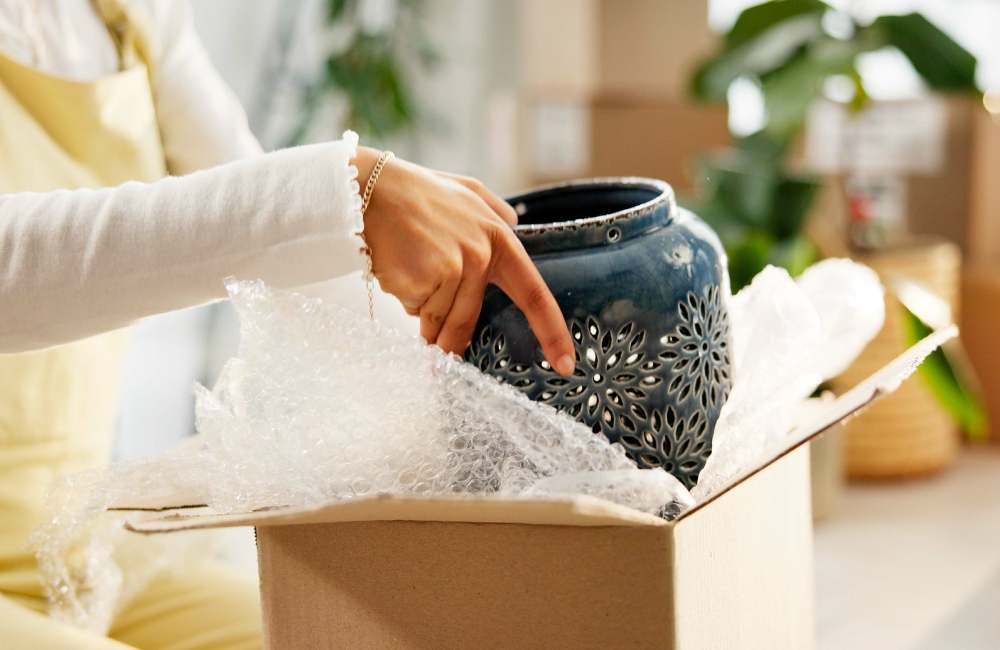
If you’ve ever unwrapped a box on moving day only to find a shattered picture frame or a cracked vase, you know that packing fragile items isn’t something you want to rush. At Bert Hill Moving, our crews have packed thousands of households across Westfield, East Granby, and the surrounding Hartford-Springfield corridor, and we’ve seen firsthand which packing habits save the day — and which ones lead to tears (and broken glass) on the other end.
The good news is that packing fragile items doesn’t require special talent. It requires the right materials, a little patience, and a room-by-room plan. Here’s how we recommend tackling it.
Why Packing Technique Actually Matters
Moving is already a major undertaking. The moving and storage industry handles tens of millions of relocations every year, and the average American moves close to a dozen times over their lifetime, according to industry data. With that much moving happening, it’s no surprise that breakage during transit is one of the most common — and most preventable — sources of moving-day frustration.
The difference between a box that survives a move and one that doesn’t usually comes down to three things: the right box size, enough cushioning, and smart stacking. Let’s go room by room.
Kitchen: Dishes, Glassware, and Small Appliances
The kitchen is often the most fragile-heavy room in the house, and it’s also where people tend to take shortcuts because “it’s just dishes.”
Plates: Always pack plates vertically, like records in a crate, rather than stacking them flat. Vertical plates distribute pressure evenly around the rim rather than concentrating it at the center, where most cracks start.
Glasses and stemware: Wrap each glass individually in packing paper, then place a layer of crumpled paper at the bottom of the box for cushioning. Stemware should go in a dedicated dish-pack box with cell dividers if possible.
Small appliances: Use the original box if you still have it. If not, wrap the appliance in a moving blanket or towel and fill any empty space in the box with packing paper so nothing shifts during transit.
Pro tip: Label these boxes “FRAGILE — THIS SIDE UP” on at least two sides, not just the top. Boxes get rotated more than people expect during loading.
Living Room: Electronics, Mirrors, and Décor
Living rooms tend to have a mix of large flat items (TVs, mirrors, framed art) and small breakables (lamps, figurines, glass tabletops).
TVs and monitors: If you don’t have the original box, a flat-screen TV box (available from most moving and storage suppliers) is worth the small investment. Wrap the screen in a moving blanket first, then place it upright in the box — never flat, which can crack the panel under pressure.
Mirrors and framed art: Use cardboard corner protectors on all four corners, then wrap in bubble wrap or a moving blanket. For larger pieces, mirror/picture boxes with adjustable sizing work best. Always transport these standing on edge, never flat.
Lamps and decorative glass: Remove shades and bulbs separately. Wrap the lamp base in paper, and pack the shade in its own box with plenty of headroom — shades crush easily under even lightweight.
Bedroom: Mirrors, Jewelry, and Keepsakes
Bedrooms often hold some of the most sentimentally valuable, fragile items — jewelry boxes, family photos, decorative mirrors, and keepsakes.
Jewelry: Small valuables should travel with you, not in the moving truck, whenever possible. If they must be packed, use a small, padded box and keep it clearly labeled (but discreetly — avoid writing “jewelry” on the outside where it’s visible to anyone handling the truck).
Dresser mirrors: Many dresser-attached mirrors can be detached for transport. If yours can’t be removed, pad it heavily and secure it so it can’t swing or shift.
Photo frames and keepsakes: Wrap individually and pack tightly in small to medium boxes — overpacking these into large boxes increases the risk of shifting and breakage.
Home Office and Miscellaneous Fragiles
Don’t overlook the items that don’t fit neatly into a “room” category: framed certificates, glass-front cabinets, collectibles, and houseplants in ceramic pots.
Glass cabinet doors: Remove if possible and pack separately, flat between layers of cardboard. If they can’t be removed, secure them with painter’s tape (never regular tape, which can damage finishes) to prevent them from swinging open.
Collectibles and figurines: Individually wrap each piece, and use a “box-in-a-box” method for especially delicate items — wrap the item, place it in a small box surrounded by packing material, then place that box inside a larger box with cushioning on all sides.
Ceramic pots: Empty soil where possible to reduce weight, wrap the pot separately from the plant, and transport plants upright in a stable, ventilated box.
General Rules That Apply to Every Room
A few habits make a noticeable difference, no matter what you’re packing:
- Heavier items go at the bottom of the box, and lighter, more fragile items on top. This seems obvious, but it’s the most commonly skipped rule.
- Fill the empty space. Boxes that aren’t fully packed allow contents to shift, which is when most breakage happens — not from being dropped, but from movement during transit.
- Don’t overload boxes. A box that’s too heavy is more likely to be dropped or to have its bottom give out.
- Use real packing paper, not newspaper, for anything you don’t want covered in ink.
When to Call in the Pros
Given how much moving Americans do over a lifetime — and how much economic activity the moving and storage industry represents nationally, generating tens of billions of dollars annually and supporting hundreds of thousands of jobs with the moving and storage industry contributing $92.2 billion in economic activity annually and employing over 480,000 people — it’s clear that professional packing expertise exists for a reason. If you’re moving a houseful of fragile items and the idea of wrapping every glass and frame yourself feels overwhelming, that’s exactly what our team is here for.
Bert Hill Moving offers full and partial packing services for households throughout East Granby, Westfield, Simsbury, Southwick, and the greater Hartford-Springfield corridor. Whether you want us to handle just the china cabinet or the entire house, we bring the materials, techniques, and experience to ensure your fragile items arrive at your new home in one piece.
Ready to start planning your move? Contact Bert Hill Moving and Storage for a free estimate, and let our local crew take the stress out of packing day.
Sources
- moveBuddha, “Moving Industry Statistics: Data & Trends (2026)” — https://www.movebuddha.com/blog/moving-industry-statistics/
- Supermove, “Moving Statistics: The State of Moving & Storage 2025” — https://www.supermove.com/blog/moving-statistics-the-state-of-moving-storage-2025