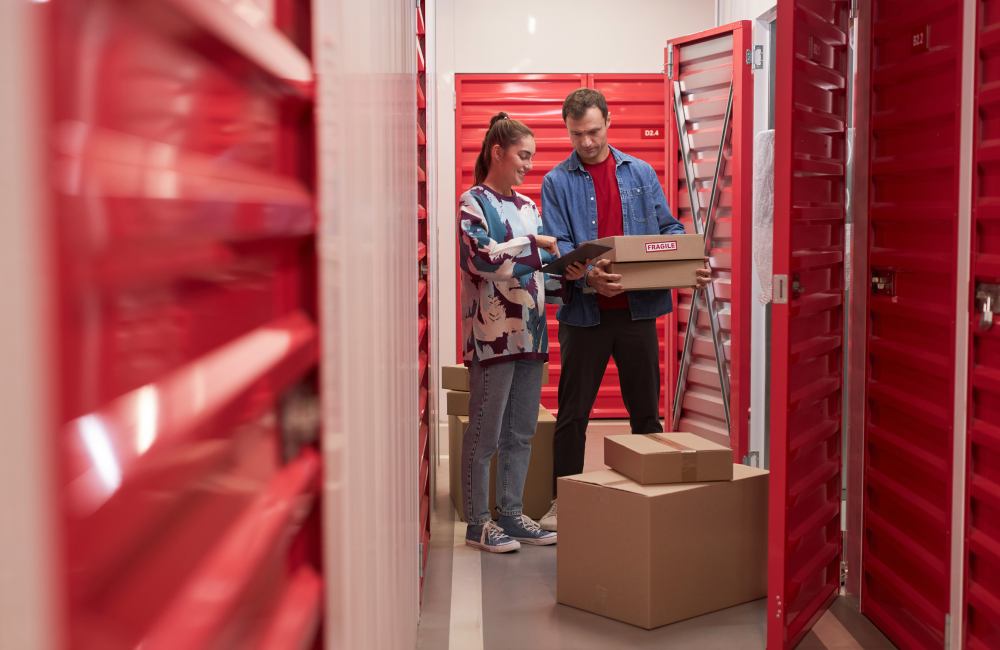
“Do I actually need a storage unit, or am I overthinking this?”
It’s one of the most common questions we hear from customers across Westfield, East Granby, Granby, and the towns along the Hartford-Springfield corridor. And honestly, there’s no one-size-fits-all answer — but there are some clear signals that point toward “yes.”
At Bert Hill Moving, storage isn’t an afterthought; it’s part of how we help local families and businesses navigate moves that don’t go in a perfectly straight line. Here’s how to think through whether a storage unit makes sense for your situation.
Storage Is More Common Than You Might Think
If you’ve never used a storage unit before, you might assume it’s a niche service for people with unusual circumstances. The numbers tell a different story. Roughly 1 in 10 American households currently rent a self-storage unit, and self-storage usage has steadily climbed, rising from under 9% of households in 2005 to around 12.6% in 2024. Some broader surveys suggest the number of Americans who have used self-storage at some point is even higher, with as many as one in three Americans reporting they currently use or have used a self-storage unit.
Why? Because life rarely moves in a straight line — and moving itself is one of the biggest reasons people turn to storage. Moving-related needs account for a large share of self-storage demand, with various industry surveys placing the figure between roughly 28% and 42% of renters citing a move as their reason for needing storage.
Signs You Probably Need Storage
1. Your Move-Out and Move-In Dates Don’t Line Up
This is the single most common reason our customers in the Hartford-Springfield area use storage. Maybe your new home’s closing got pushed back two weeks. Maybe your apartment lease ends before your house is ready. Rather than scrambling for a short-term rental or asking your belongings to “just wait in the truck,” a storage unit acts as a bridge — your things stay safe and accessible while you sort out timing.
2. You’re Downsizing and Need Time to Decide
Downsizing — whether you’re an empty-nester moving from a single-family home in Southwick to a smaller place, or a retiree relocating to be closer to family — almost never happens in one clean pass. You need time to figure out what fits in the new space and what doesn’t. A storage unit gives you breathing room to make those decisions without pressure, instead of making rushed (and often regretted) choices on moving day.
3. You’re Renovating Before or After the Move
If you’re moving into a home that needs work before you can fully unpack — new flooring, painting, kitchen renovation — storage keeps your belongings (and your furniture) safe and out of the way of contractors, dust, and debris.
4. You’re Combining Households
Moving in with a partner, consolidating after a family change, or merging two households into one almost always means there’s more “stuff” than the new space can hold — at least initially. Storage lets you take your time deciding what to keep, sell, or donate, rather than making snap decisions during an already stressful transition.
5. Seasonal or Business Storage Needs
It’s not just households. Local businesses moving offices, contractors storing equipment between job sites, or seasonal storage for items like patio furniture, holiday decorations, or recreational equipment are common reasons customers in our area use storage year-round.
Short-Term vs. Long-Term Storage
When thinking about storage, it helps to separate “bridge” storage from “ongoing” storage:
- Short-term (days to a few months): Typically tied directly to a move — closing delays, lease overlaps, or staging a home for sale. This is where moving and storage companies that offer integrated storage (rather than a separate self-storage facility) tend to be most convenient, since your items don’t have to be handled by multiple companies.
- Long-term (6+ months or more): More common for downsizing, estate situations, or business inventory. Average self-storage rental durations across the industry are in the 14-15-month range, which gives a sense of how often “short-term” storage quietly becomes longer-term.
What to Look for in a Storage Provider
Not all storage is created equal, and a few questions can save you headaches later:
- Climate control: New England winters and humid summers can be hard on wood furniture, electronics, and documents. Ask whether the facility offers climate-controlled units, especially for anything stored more than a few weeks.
- Security: Look for gated access, individual unit alarms, and on-site cameras.
- Accessibility: If you’ll need to get into your unit periodically, check access hours — some facilities restrict access more than others.
- Integration with your move: If a moving company can store your items directly (often called “warehouse storage” or “vault storage”), you avoid an extra loading and unloading step, which means less handling and lower risk of damage.
How Bert Hill Moving Can Help
Because we serve both Westfield, MA and East Granby, CT, Bert Hill Moving is positioned to offer flexible storage solutions for households and businesses throughout the region — whether you need a few weeks of bridge storage between closings or a longer-term solution while you figure out your next steps. Our team can walk through your specific timeline and help you determine whether storage makes sense and for how long.
Not sure if storage is right for your move? Reach out to Bert Hill Moving and Storage for a no-pressure conversation about your timeline and options — we’re happy to help you think it through.
Sources
- Neighbor, “Self Storage Industry Statistics (2024)” — https://www.neighbor.com/storage-blog/self-storage-industry-statistics/
- Tract IQ, “Self-Storage Market Data” (SSA 2025 Self Storage Demand Study) — https://tractiq.com/self-storage-market-data/
- SpareFoot, “U.S. Self-Storage Industry Statistics” — https://www.sparefoot.com/blog/self-storage-industry-statistics
- Alan’s Factory Outlet, “54 Self-Storage Industry Statistics to Know in 2024” — https://alansfactoryoutlet.com/blog/self-storage-industry-statistics/