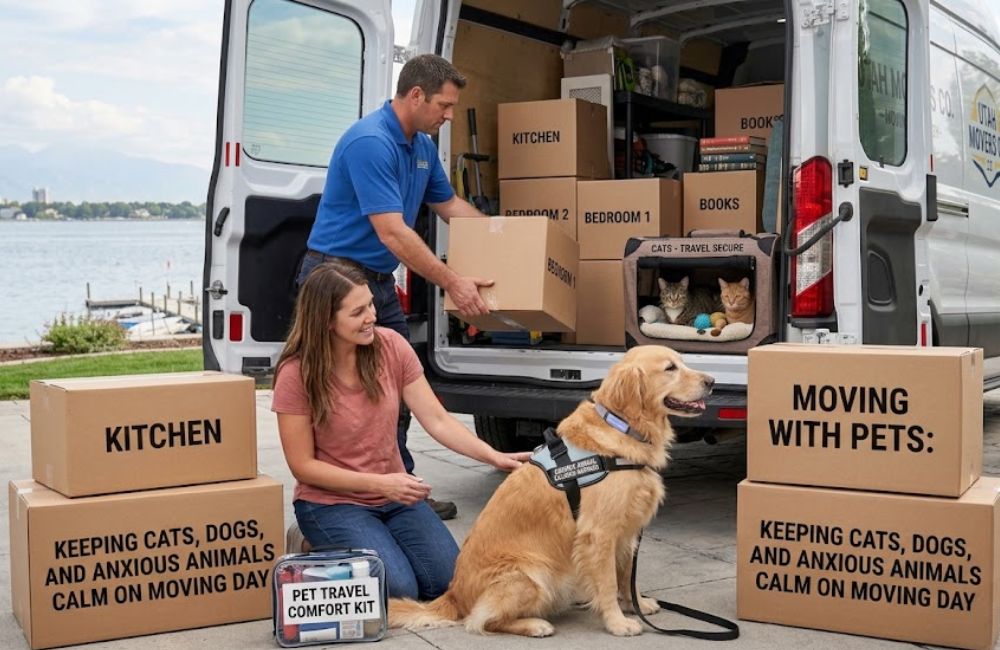
Moving with pets is a different kind of moving day than moving without them. Boxes, strangers in the house, unfamiliar noise, and a home that suddenly smells wrong — for a cat or dog, that’s not exciting; it’s alarming. At Bert Hill Moving & Storage, our crews have worked around plenty of nervous pets in Western Massachusetts and Northern Connecticut homes over the years, and the smoothest moves are almost always the ones where the pet had a plan, too.
Here’s how to prepare a cat or dog for moving day, what to do on the day itself, and how to help them settle once you’re in the new house.
Why Moving Is So Hard on Pets
Dogs and cats build a sense of security around territory, routine, and scent — three things a move disrupts all at once. The ASPCA notes that moving to a new home can be one of the most stressful life events for pets, even though owners are usually focused on their own stress and don’t always notice how much their animals are picking up on it. A pet that suddenly hides, stops eating, paces, or has bathroom accidents in the days around a move isn’t being difficult — it’s responding to genuine anxiety about its environment changing.
Cats tend to show this differently than dogs. A cat is more likely to withdraw, hide under furniture, or stop using the litter box normally, while a dog is more likely to pace, bark, whine, or try to bolt out an open door while movers are carrying boxes in and out.
Before Moving Day: Preparing Your Pet Weeks in Advance
The AVMA recommends treating a move like any other trip that disrupts a pet’s routine — with planning that starts well before the actual day. If your pet isn’t used to a crate or carrier, the AVMA advises gradually acclimating them to it in the weeks leading up to travel, rather than introducing it on moving day itself.
A few things worth doing in the weeks before your move:
- Update ID tags and microchip information with your new address before the move, not after — pets are more likely to bolt during a chaotic moving day, and outdated contact information makes it much harder to get them back.
- Schedule a check-up if you’re moving any real distance, especially if your pet is older or has a medical condition, and ask your vet for a copy of medical records to bring along.
- Practice short car rides if your pet isn’t used to travel, so the actual moving-day trip isn’t the first time they’ve been in a moving vehicle for more than a few minutes.
- Keep their normal routine going for as long as possible — same feeding times, same walks — even as the house fills up with boxes around them.
If your move involves a gap between homes, this is also a good time to think through how you’ll handle timing — the same way you’d plan around any long-distance move logistics.
On Moving Day: Keeping Pets Safe While the House Is in Motion
Moving day is the highest-risk window, simply because doors are open constantly and more strangers move through the house than your pet has ever seen at once. The safest approach is also the simplest one: remove your pet from the chaos entirely.
Set your dog or cat up in a closed-off room — a bathroom or bedroom works well — with food, water, a litter box if needed, and a few familiar items, and put a sign on the door so movers know not to open it. For dogs that get anxious with noise and activity, a friend’s house or a day at doggy daycare can be a lower-stress option than being in the house at all. Whatever you choose, the goal is the same: your pet should never be in a position to slip out an open door while boxes are being carried past them.
If you’re packing yourself rather than using a full-service packing service, pack your pet’s room last and unpack it first so their space stays intact for as long as possible on both ends of the move.
Settling In: The First Days in a New Home
Resist the urge to let your pet roam the whole house right away. The ASPCA recommends starting with one room set up as a “home base” — complete with their bed, bowls, toys, and litter box — and gradually expanding their access to the rest of the house as they seem comfortable, rather than overwhelming them with the whole footprint at once.
It also helps to pet-proof before you let them explore: tuck away cords, check that window screens are secure, and confirm no pest-control products were left behind by a previous owner or contractor. For cats especially, keep an eye on doors and windows for the first week or two — cats that feel unsettled are more likely to try to find their way back to a home that no longer exists.
What About Anxious or Elderly Pets?
Some pets need more than the standard playbook. A senior dog with joint issues may struggle with a new set of stairs. A cat with a history of anxiety may need a pheromone diffuser or a covered carrier to feel secure during transport. If your pet has a known anxiety condition or a medical issue, it’s worth a conversation with your veterinarian before the move about whether any additional support — behavioral or medical — makes sense for moving day specifically, rather than waiting to see how they react.
Frequently Asked Questions About Moving with Pets
Should I keep my pet with me during the move or board them?
Either can work. Keeping them in a closed-off room at home avoids the stress of an unfamiliar boarding environment, while boarding or a friend’s house removes them from the noise and open doors entirely. Choose based on how your pet handles stress and strangers.
How do I stop my cat from hiding for weeks after a move?
Give them a small, contained “home base” room with familiar scents and items, and let them expand into the rest of the house gradually rather than all at once. Forcing exploration too early usually extends the adjustment period rather than shortening it.
Do I need to update my pet’s microchip before moving?
Yes — update the microchip registry and ID tags with your new address before moving day. Pets are statistically more likely to slip out during the moving process, and outdated information makes it harder to reunite you if that happens.
Is it safe to sedate my pet for a move?
Only under veterinary guidance. Sedation isn’t appropriate for every pet or every situation, and your vet can advise whether it’s necessary or whether behavioral strategies are a better first step.
How long does it typically take a pet to adjust to a new home?
Most cats and dogs settle within a few weeks, though it varies by pet and by how much of their routine and environment stayed consistent through the move. Pets with a security room and a gradual introduction to the new space tend to adjust faster than those given full run of the house immediately.
How Bert Hill Approaches Moves With Pets in the Home
Our crews are used to working around a closed door with a “pet inside” sign, and we’re happy to coordinate timing with you if your dog or cat needs to be picked up, dropped off, or moved to a quieter part of the house partway through the day. If your move involves a storage gap between homes, our on-site storage option means your pet’s bed, crate, and familiar items can travel with the rest of your things on a timeline that works for your household — not just your furniture.
We’ve been moving families throughout Western Massachusetts and Northern Connecticut since 1915, including four-legged members. If you’re planning a move and want to talk through the logistics — pets and all — get a free estimate from our team.
Sources
- ASPCA, “Moving With Your Pet” — aspca.org
- American Veterinary Medical Association, “Traveling with Your Dog or Cat” — avma.org