Moving with kids changes the whole shape of a move. You’re not only packing a house, but you’re also managing a small person’s sense of what is safe, familiar, and theirs. A toddler may not understand why the bedroom is emptying. A ten-year-old may be quietly worried about making friends. A teenager may be openly furious. At Bert Hill Moving & Storage, we’ve moved families across Western Massachusetts and Northern Connecticut since 1915, and the calmest moving days we see are the ones where the kids were part of the plan.
Here’s how to prepare children for a move, what to expect at different ages, and how to help them settle in once the boxes are down.
Why Moving Is Hard on Children
Adults tend to see a move as a logistics problem. Children experience it as a loss of routine, friends, and place. The American Academy of Child and Adolescent Psychiatry (AACAP) notes that a move can be one of the most stressful experiences a family faces, and that it is harder when it arrives alongside other big changes such as a new school, a job loss, or a family disruption. Moves also interrupt friendships, and a new student may feel that classmates have already settled into their groups.
Not every child shows stress out loud. AACAP points out that some children don’t talk about their feelings, so parents need to watch for signs instead of waiting to be told.
What to Expect at Different Ages
Children react differently depending on their developmental stage. These are general patterns, and every child is an individual.
- Toddlers and preschoolers care most about routine and the people and objects they know. Keep naps, meals, and bedtime rituals as steady as you can, and pack a favorite blanket or stuffed animal where you can reach it, not on the truck.
- Kindergarten and early elementary children are still learning to separate from parents and adjust to new adults. AACAP notes that a move can push young children toward more dependence on parents, so extra reassurance is normal.
- Older children and teens rely heavily on friendships, which makes leaving harder. AACAP observes that pre-teens and teens may object repeatedly to a move or ask to stay with a friend’s family. Take those feelings seriously even when the move can’t change.
Before the Move: Talk Early and Honestly
Tell your children about the move before they hear it from someone else, and explain why it’s happening in simple, truthful terms. AACAP recommends explaining clearly why the family is moving. Then leave room for questions and feelings. Per PBS Parents, kids are often nervous when they don’t know what to expect, and letting them voice that nervousness helps.
Make the unknown feel smaller. Both AACAP and PBS suggest helping children get familiar with the new place ahead of time, using maps, photos of the home, school, and neighborhood, and local information. If you can visit before the move, even better. Point out things your child might actually enjoy, such as a playground, a library, or a trail near the new house.
Give Kids a Real Job in the Move
Children cope better when they have some control, so the best advice for moving with kids is to give them real responsibilities. A few ways to do it:
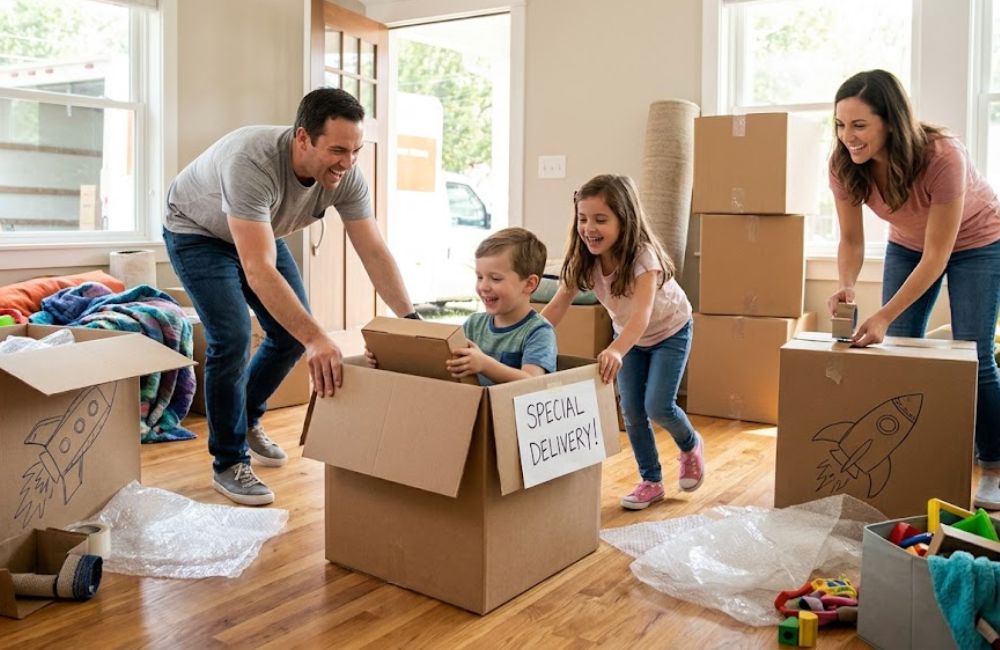
- Let them pack their own box. PBS suggests letting kids decorate boxes and fill them with their own clothes or stuffed animals. A decorated box is also easy to spot when the truck is unloaded. Our packing and preparation tips cover how to label so every room ends up in the right place.
- Involve them in the new room. AACAP suggests letting children help design or furnish their new space. Even choosing a paint color or where the bed goes can restore a sense of ownership.
- Make a goodbye plan. PBS recommends saying “see you later” instead of “goodbye” and using video calls and apps to stay in touch with friends. AACAP adds phone calls, letters, email, and visits.
If your family has a four-legged member, don’t forget to plan for them too. Our guide to moving with pets covers how to keep cats and dogs calm while the house is in motion.
Moving Day: Keep Kids Safe, Fed, and Out of the Way
Moving day is loud, busy, and full of heavy things in motion, which makes it the riskiest part of moving with kids. The kindest approach for younger children is often to have a trusted adult or relative take them out of the house for part of the day. If they stay, set up a quiet “home base” room with snacks, water, toys, and a screen or book, and mark it so movers know it’s occupied.
Pack an overnight bag for each child with pajamas, a change of clothes, toiletries, a favorite stuffed animal, and a night light, and keep these bags with you. The first night in a new home is much easier when the bedtime routine works. Hiring professionals for the heavy work also keeps your attention on your kids instead of the furniture, which is one reason families call our local movers for a move across town.
Settling In: The First Weeks in a New Home
Set up the kids’ rooms first. A bed made with familiar sheets and favorite toys on the shelf tells a child that this is still their home. Keep routines, mealtimes, and bedtimes as close to normal as you can for the first few weeks. Then help them find their footing in the community. AACAP encourages families to get involved in local activities, such as religious communities, scouting, or recreation centers. PBS suggests finding familiar kinds of places, such as a grocery store, playground, or parent group, and reminds parents that settling in can take several months. Expect the adjustment to take time and don’t compare your child’s pace to anyone else’s.
When to Ask for Help
Some sadness and irritability after a move is normal. But according to AACAP, parents should watch for warning signs of deeper distress, including changes in appetite, social withdrawal, falling grades, irritability, sleep problems, and marked changes in mood or behavior. If these continue, AACAP advises talking with your family doctor or pediatrician, who can refer you to a child and adolescent mental health professional. AACAP also notes that a child who seems depressed may be reacting to stress in general instead of the move itself.
Frequently Asked Questions About Moving with Kids
When should I tell my kids we’re moving?
As soon as the decision is firm and you can explain it calmly. Children should hear it from you, not from a neighbor or a friend. Give them time to ask questions and react before the packing starts.
What is the best age to move a child?
There isn’t a perfect age. Younger children mostly need routine and reassurance, while older children and teens tend to struggle more with leaving friends. Plan around your child’s needs, and consider timing around the school calendar when you can.
Should my kids be home on moving day?
It depends on their age and temperament. Many families arrange for younger children to spend part of the day with a relative or friend. If they stay home, give them a quiet space away from the traffic and an adult to supervise them.
How can I help my teenager adjust?
Listen without trying to fix every feeling, keep them connected to friends, give them a say in their new room, and help them find activities that match their interests. If they stay withdrawn for a long period, speak with your pediatrician.
How long does it take kids to adjust to a new home?
It varies. PBS notes that settling in can take several months. Consistent routines, a welcoming bedroom, and connections to new activities help the most.
How Bert Hill Helps Families Move with Less Stress
We can’t pack your child’s favorite stuffed animal for you, and we wouldn’t want to. But we can take the heavy lifting, protecting, and loading off your plate so you have the time and patience to focus on your kids. From full-service packing to local and long-distance moves, our crews have helped thousands of families across Western Massachusetts and Northern Connecticut. If you’re planning a family move, get a free estimate and tell us about your timeline.
Sources
- American Academy of Child and Adolescent Psychiatry, “Moving: Helping Children Cope” — aacap.org
- PBS Parents, “How to Talk to Kids About a Big Move” — pbs.org