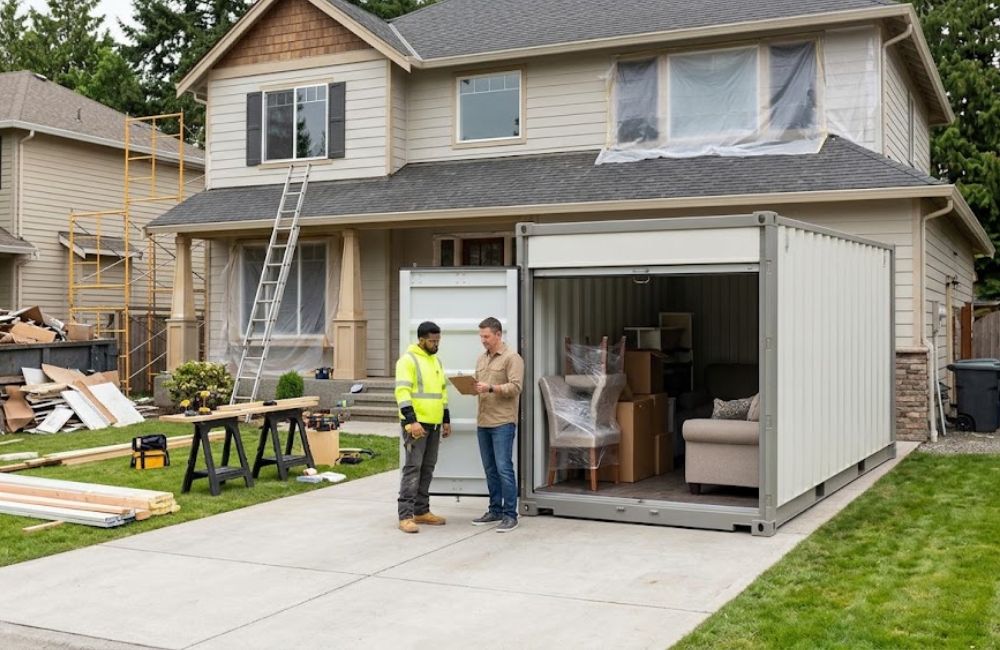
Storage during home renovation is the part of a remodel that almost nobody plans for until the contractor asks, “Where is all this stuff going to go?” A kitchen remodel empties every cabinet. A flooring project means every piece of furniture in the room has to leave. A basement or addition can push half a household into the garage. At Bert Hill Moving & Storage, we’ve been helping families in Western Massachusetts and Northern Connecticut protect their belongings since 1915, and storage is just as useful when you’re staying put. The house is the thing that’s moving.
This guide to storage during home renovation covers why your belongings need to leave the work area, the main ways to store them, what each option involves, and how to plan so the project doesn’t stall.
Why Your Belongings Need to Leave the Work Area
Renovation creates dust, vibration, moisture, and foot traffic, and furniture left in the middle of it often pays the price. Drywall dust settles into upholstery and electronics. Dropped tools scratch tabletops. Workers who have to move around your furniture every day are more likely to bump it. Removing everything from the work area also lets the crew finish faster, because they aren’t stopping to shift a sofa or protect a bookcase.
Older homes add another reason to be careful. According to the U.S. Environmental Protection Agency (EPA), its lead rules cover homes and apartments built before 1978, and a contractor working on a home from that era should give you information about lead hazards and be trained and certified to work on pre-1978 residences. The EPA also recommends keeping your home clean and dust-free. Western Massachusetts and Northern Connecticut have many homes built before 1978, so ask your contractor about this before demolition starts. Belongings stored away from the work area also stay out of the dust.
Your Storage Options During a Renovation
Most homeowners choose from four storage options during a home renovation, and the right one depends on the project size, how long it will take, and how much space you have.
Spare rooms, the garage, or the basement
The cheapest option is to stack everything in a part of the house that isn’t being renovated. It works for small projects such as a bathroom refresh. It stops working when the project is large, because crowded rooms become a safety hazard, and a garage or basement may be damp, cold, or hot, which isn’t kind to wood furniture, electronics, or mattresses.
Portable storage containers
A portable container is delivered to your driveway, you load it at your own pace, and it stays on your property until the work is done. It keeps your belongings close, lets you reach them if you need something, and clears the house in one step. We cover how containers work in more detail in our guide to moving on your timeline with portable storage containers.
Full-service storage at a facility
If your driveway is too small, your town restricts containers, or you’d rather not have a container sitting in front of the house for months, off-site storage is the alternative. Our on-site storage facility in Westfield is heated, clean, and dry. Our crews wrap your belongings in thick storage pads and place them in sealed wooden vaults. We pad, shrink-wrap, and place upholstered items on racks. The facility is locked, armed, and has a sprinkler system. Our storage 101 guide explains when you need a storage unit and which type fits.
Renting a self-storage unit and doing it yourself
This path means renting a unit, finding a truck, loading, driving, unloading, and doing it all again in reverse. The rental may look inexpensive on paper, but it adds up once you factor in the truck, the labor, and the weekends. Our post on DIY moving costs walks through the hidden expenses.
How Bert Hill’s Portable Storage Containers Work for a Remodel
Our portable storage containers are 8 feet wide, 8 feet high, and 16 feet long, with rubber non-slip flooring, and each one is lockable so that you can use your own lock. They are weather-resistant and secure. Here is how the process works for a renovation:
- Delivery: We deliver the container to your property. Delivery within a 15-mile radius of our Westfield office is $110, and each additional move is another $110.
- Loading: You can load it yourself at your own pace, or have our movers do it.
- Rental: The monthly rental is $190 plus tax per container.
- Location: You can keep the container on your property, or we can store it at our secure facility if your driveway needs to stay clear for contractors.
- Return: When the work is done, you or our movers unload it into the finished space.
These are the rates on our current portable storage page, and they can change, so confirm pricing when you request your estimate. We serve many towns across Western Massachusetts and north-central Connecticut, and we can quote special pricing for towns outside our listed area.
How to Plan Storage During Home Renovation
Decide what must leave and what can stay.
Walk through each room in the work zone with your contractor and agree on what has to move. Anything with a screen, a finish, or upholstery should leave. Heavy items that the crew can safely cover and work around, such as a piano or a large cabinet in an adjacent room, may be able to stay, though we’d still recommend asking us about moving a piano if it’s in the path of the work.
Estimate how much space you need.
List the rooms in the work zone and count the large pieces first: sofas, beds, dressers, tables. Then add the boxes. Kitchens are deceptive because they hold hundreds of small items. For reference, a container is 8 by 8 by 16 feet, and at our facility one wooden vault holds about one room of furniture. If you aren’t sure how much space you need, ask for a free estimate, and we’ll help you size it up.
Pack so you can find things again.
Label every box with the room it came from and what’s inside, and keep a simple inventory. Put the things you’ll need during the project, such as a coffee maker, a few plates, and basic tools, in a “temporary kitchen” box that stays with you. Our guide to packing and preparation tips covers labeling and loading, and if you’d rather not pack yourself, our packing services can take it on.
Check your town’s rules.
Some towns have rules about where a container can sit, and some neighborhoods have association restrictions. Ask your town hall or association before the container arrives, and tell us about any limits when you book.
Build a buffer into the schedule.
Renovations rarely finish on the day the contractor first predicts, and storage costs grow when they slip. Keep your storage booked for a bit longer than the estimated timeline so you aren’t scrambling if the work runs over.
Frequently Asked Questions About Storage During Home Renovation
How long can I keep a portable storage container?
Rental is billed monthly, so a longer project means more months. Please tell us your expected timeline when you book, and ask about extending if the work runs over.
Can I access my belongings while they are in storage?
If the container stays on your property, yes. It’s lockable, and you can open it whenever you need something. For items stored at our facility, contact us to arrange access.
Will my furniture be safe from weather in a container?
Our containers are weather-resistant, but good packing still matters. Use furniture pads or blankets, keep items off the floor when you can, and avoid storing anything that doesn’t tolerate temperature swings. Our facility is heated, clean, and dry, which is a better fit for sensitive items.
Is a container or a storage facility better for a renovation?
A container is best when you want your belongings nearby and your driveway can handle it. A facility is better when space is tight, the project is long, or you want full-service handling. We can help you compare the two.
What can’t I put in storage?
We don’t allow food or flammables in our storage facility. Check with us about other restricted items before you pack.
How Bert Hill Helps With Renovation Storage
As a family-owned company with locations in Westfield, MA, and East Granby, CT, we can handle storage during home renovation from start to finish, from delivering a container to packing, loading, storing, and bringing everything back when your new space is ready. If you’re planning a remodel, learn more about our portable storage containers or get a free estimate.
Sources
- U.S. Environmental Protection Agency, “EPA Enforces Lead-based Paint Laws to Protect You and Your Family” — epa.gov
- Bert Hill Moving & Storage, “Portable Storage Containers” — berthill.com
- Bert Hill Moving & Storage, “On-Site Storage” — berthill.com