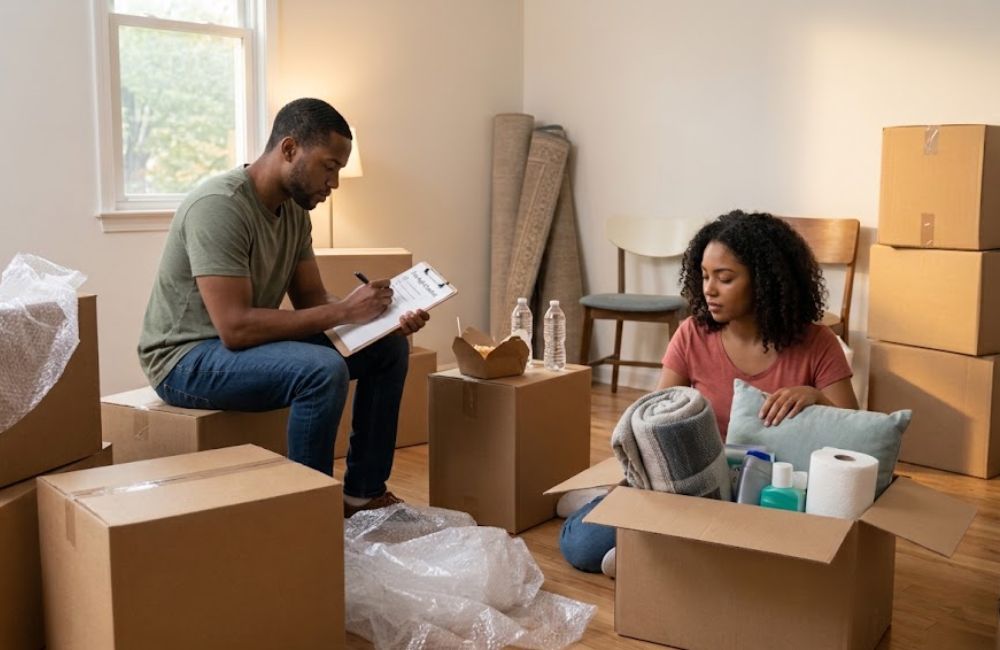
The first night in your new home is rarely the cozy, celebratory evening people picture. The truck is empty, the boxes are stacked to the ceiling, everyone is tired, and nobody can find the toothbrushes. Most moving checklists end when the movers drive away, which is exactly when many people feel the most lost. At Bert Hill Moving & Storage, we’ve been unloading trucks across Western Massachusetts and Northern Connecticut since 1915, and the families who settle in fastest are the ones who planned for that first evening before moving day.
This checklist covers what to pack separately, what to do in the first hour, how to set up beds and safety basics, and how to keep kids and pets calm until the house starts to feel like yours.
Pack an Essentials Box Before Moving Day
A little planning makes the first night in your new home much easier, and it starts with one box.
The most useful thing you can do for the first night in your new home happens before the move. Pack an essentials box, or one per person, and keep it with you in the car instead of letting it go on the truck. Mark it clearly, and tell the movers not to load it. A good essentials box holds:
- Phone chargers, a power strip, and any medications
- Toilet paper, hand soap, towels, and toiletries
- A change of clothes, pajamas, and a jacket for each person
- Paper plates, cups, utensils, a can opener, and a few snacks
- Sheets, pillows, and a blanket for each bed
- A flashlight, basic tools such as a screwdriver and box cutter, and trash bags
- Pet food, bowls, a leash, and a litter box if you have animals
- Important documents, keys, and anything valuable you don’t want on a truck
Our 8-week moving checklist covers the weeks leading up to the move, and the essentials box ties the two phases together.
The First Hour: Walk Through Before You Unpack
Use the first hour of your first night in your new home to check, not unpack. Resist the urge to start opening boxes. Take ten minutes to walk through the house and check a few basics while the movers are still there or have just left.
- Do a damage walk-through. Check your furniture and boxes against your inventory, and report anything damaged right away. If you chose a coverage option, our guide to full value protection vs. released value explains how claims work.
- Locate the shutoffs. Find the main water shutoff, the electrical panel, and the gas shutoff if your home has one. If a pipe leaks or a breaker trips at 10 p.m., you’ll want to know where to go.
- Check the locks. Make sure every exterior door locks properly and every key you were given works. Consider having locks changed or rekeyed, since you can’t know who else holds a copy of the old ones.
- Look for obvious problems. Run the taps, flush the toilets, turn on the lights, and check that the heat or air conditioning works.
Safety Basics: Smoke Alarms Come First
On the first night in a home you didn’t live in yesterday, you don’t know the condition of the smoke alarms. The U.S. Fire Administration advises testing smoke alarms monthly, and notes that alarms expire 10 years after the manufacture date, at which point the whole unit should be replaced, not just the battery. It recommends alarms inside and outside each bedroom or sleeping area and on every level of the home, including the basement, and that they be interconnected so that when one sounds, they all sound.
Press the test button on every alarm tonight. Check the date printed on the back of each unit. If an alarm is missing, chirping, or more than 10 years old, put it at the top of your list. If you have hardwired alarms, the USFA says only qualified electricians should install them.
Set Up Beds First
Everything else can wait, but a bed can’t. Before you do anything else, assemble the beds and make them with the sheets from your essentials box. Start with the mattresses for children and anyone who has to be up early. If a bed frame needs reassembly, keep the tools from your essentials box nearby. Setting up the beds first means the first night in your new home ends with real rest, not an air mattress on a box-covered floor.
Next, set up the bathroom with towels, soap, and toilet paper, then clear a small spot in the kitchen for the snacks and drinks you packed. You don’t need a full kitchen tonight. Order dinner, use the paper plates, and call it a win.
Helping Kids and Pets Settle In
Children and animals take their cues from the room, and an unfamiliar house at night can feel overwhelming. For kids, set up their beds and favorite items first, keep bedtime routines as close to normal as you can, and have a night light ready. Our guide to moving with kids has more ideas for the first days.
For pets, start with one room as a “home base” with their bed, bowls, and litter box, then expand their space gradually. Check that windows and doors are secure before you let them explore, and keep an eye on cats in particular, since they may try to hide. Our post on moving with pets covers the details.
Take Care of the Mail and Address Details
You can take care of one more item tonight in five minutes: confirm your mail forwarding. According to the United States Postal Service, standard mail forwarding lasts 12 months, and it advises allowing at least 7 to 10 business days after approval for the change to take effect. If you haven’t filed yet, do it now, since filing early avoids a gap in your mail. Then start a short list of everyone who needs your new address, such as your bank, employer, insurer, and doctor.
What Can Wait Until Tomorrow
Your goal for the first night in your new home is safe, rested, and fed, not finished.
It helps to decide in advance what you won’t do tonight. You don’t need to unpack the kitchen, hang pictures, organize closets, or find a place for every piece of furniture. Do a quick pass to move boxes into the rooms where they belong, using the labels you wrote during packing. If you hired our packing services, our crew will have labeled everything so each box lands in the right room. Then stop. The house will still be there in the morning.
Frequently Asked Questions About the First Night in Your New Home
What should I do first when I get to my new home?
Do a quick walk-through to check for problems, locate the water, electrical, and gas shutoffs, and make sure the locks work. Then set up beds and the bathroom before you unpack anything else.
What should be in a first-night box?
Chargers, medications, toiletries, towels, bedding, a change of clothes, paper plates and utensils, snacks, a flashlight, basic tools, trash bags, pet supplies, and important documents. Keep it with you instead of putting it on the truck.
Should I test the smoke alarms in a new home?
Yes. The U.S. Fire Administration recommends testing smoke alarms monthly, replacing units that are 10 years past the manufacture date, and having alarms on every level and near sleeping areas.
Should I change the locks on a new home?
Many people do, since you can’t be sure who has copies of the old keys. At a minimum, check that every exterior lock works, and ask a locksmith about rekeying.
How long does it take to feel settled after a move?
It varies. Most people feel the practical parts of the move come together in a few weeks, while the sense of home can take longer. Focus on beds, bathrooms, and a working kitchen first, and let the rest happen at a comfortable pace.
How Bert Hill Helps You Get Through the First Night
Our crews can handle the packing and unpacking, so you spend less of that first evening hunting for sheets. As a family-owned company serving Westfield, MA, and East Granby, CT, we’ve seen how much easier the first night in your new home is when the move is organized. If you’re planning a move, get a free estimate and tell us how we can help.
Sources
- U.S. Fire Administration, “Smoke Alarms” — usfa.fema.gov
- United States Postal Service, “Change of Address” — usps.com